Onboarding and exploring hyperlocal marketplace
Onboarding and exploring hyperlocal marketplace
Sole designer on the global team / Karrot (당근마켓) / Feb - Mar 2021
Context
Karrot is one of Korea’s most popular community marketplaces, with over 30 million users globally and a growing presence in Canada, the UK, and Japan.
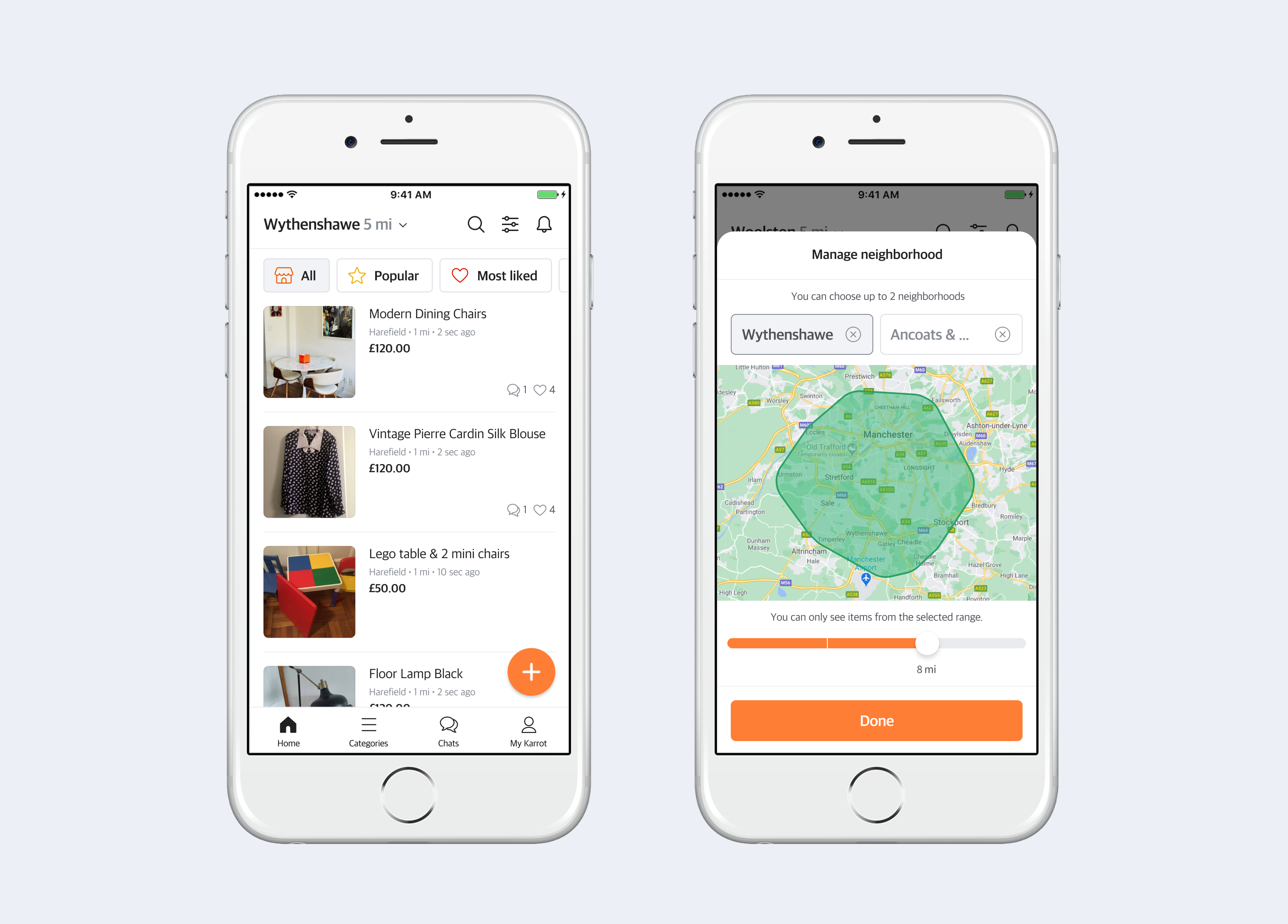
When Karrot started expanding globally, I joined to help rethink how it worked for new audiences. The app was a straight translation from the Korean version, and in places like the UK, US, Canada, and Japan, that just wasn’t working.
The feed was just a running list of posts based on recency. There was no onboarding. And the UX made Western users feel like they were missing something. The app hadn’t been designed with their mental models in mind.
Goals
I focused on the two biggest levers for activation: signing-up, onboarding, and the home feed.
The main goal was to get new users to understand what Karrot is, feel safe using it, and start engaging all within their first session or two.
Solution
Redesign Karrot’s global experience to feel intuitive, engaging, and culturally relevant.
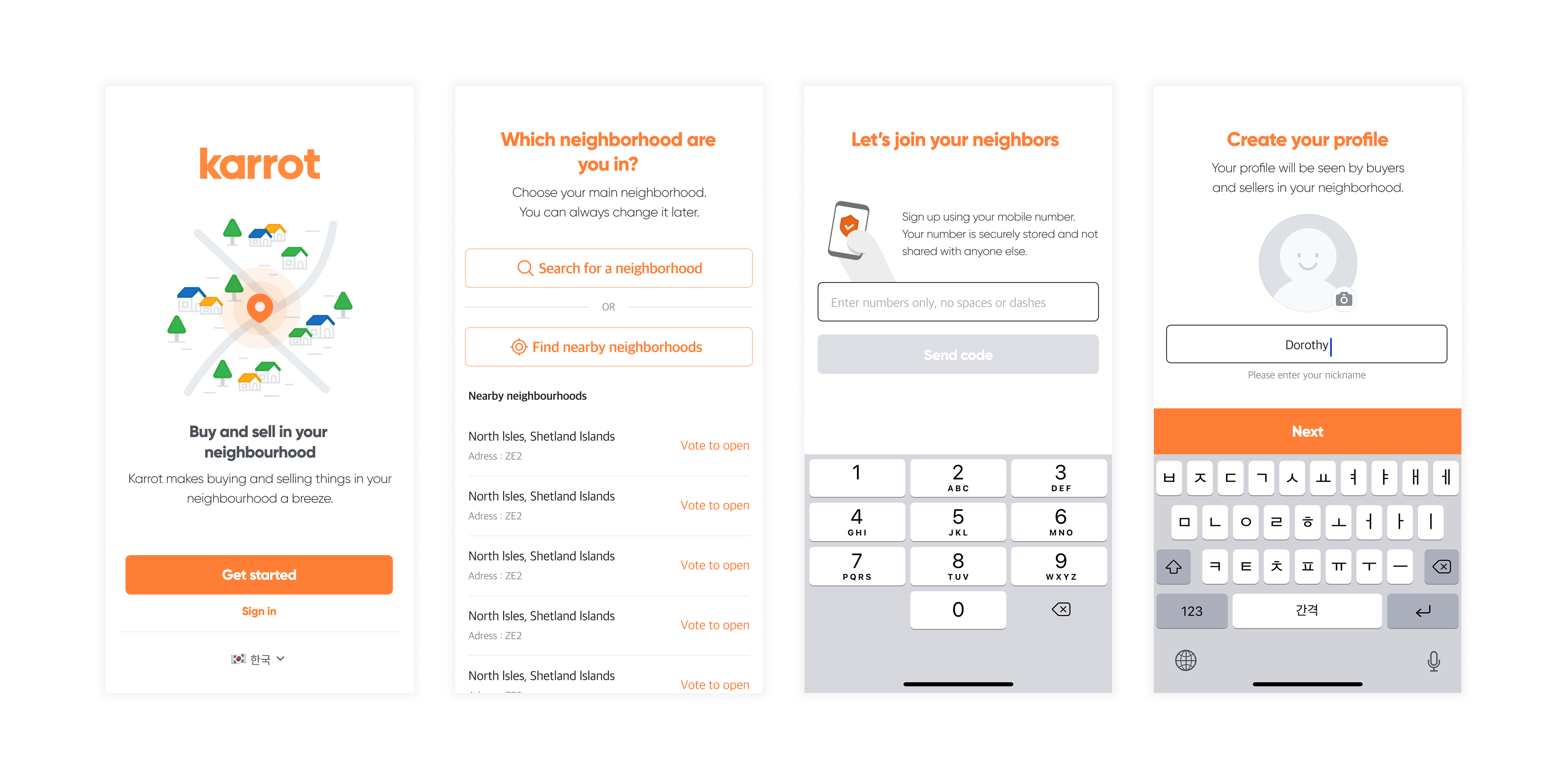
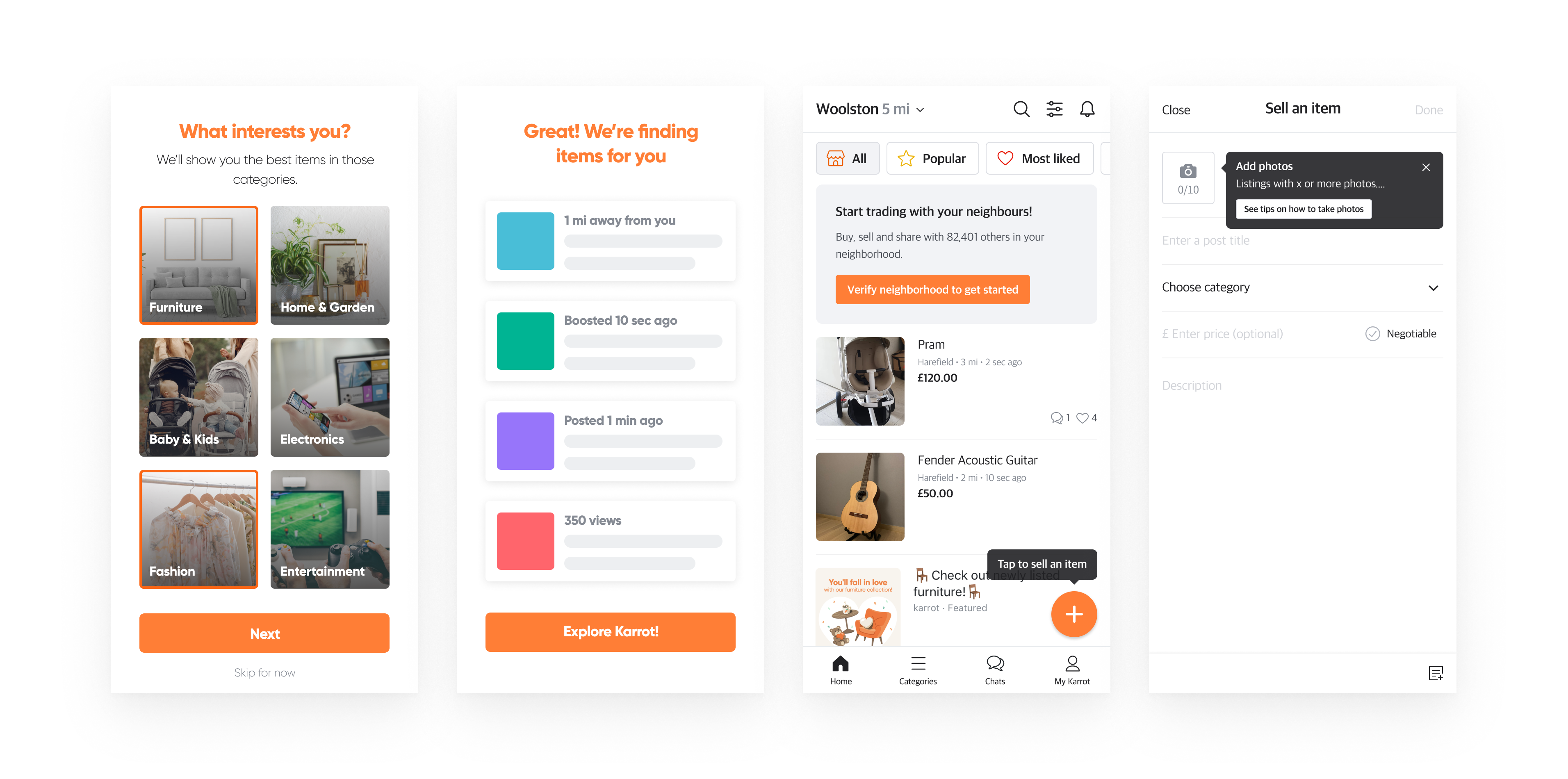
A localized onboarding experience.
We kicked things off by asking for neighborhood selection either through search or GPS. This was crucial. Karrot is a hyperlocal app, so “where are you?” is the first question that matters.
From there, I added a real onboarding flow, mobile verification and a light profile to reinforce credibility.
We also asked about interests and surfaced promos and tooltips based on those categories, which is a subtle nudge to help users take their first meaningful action.
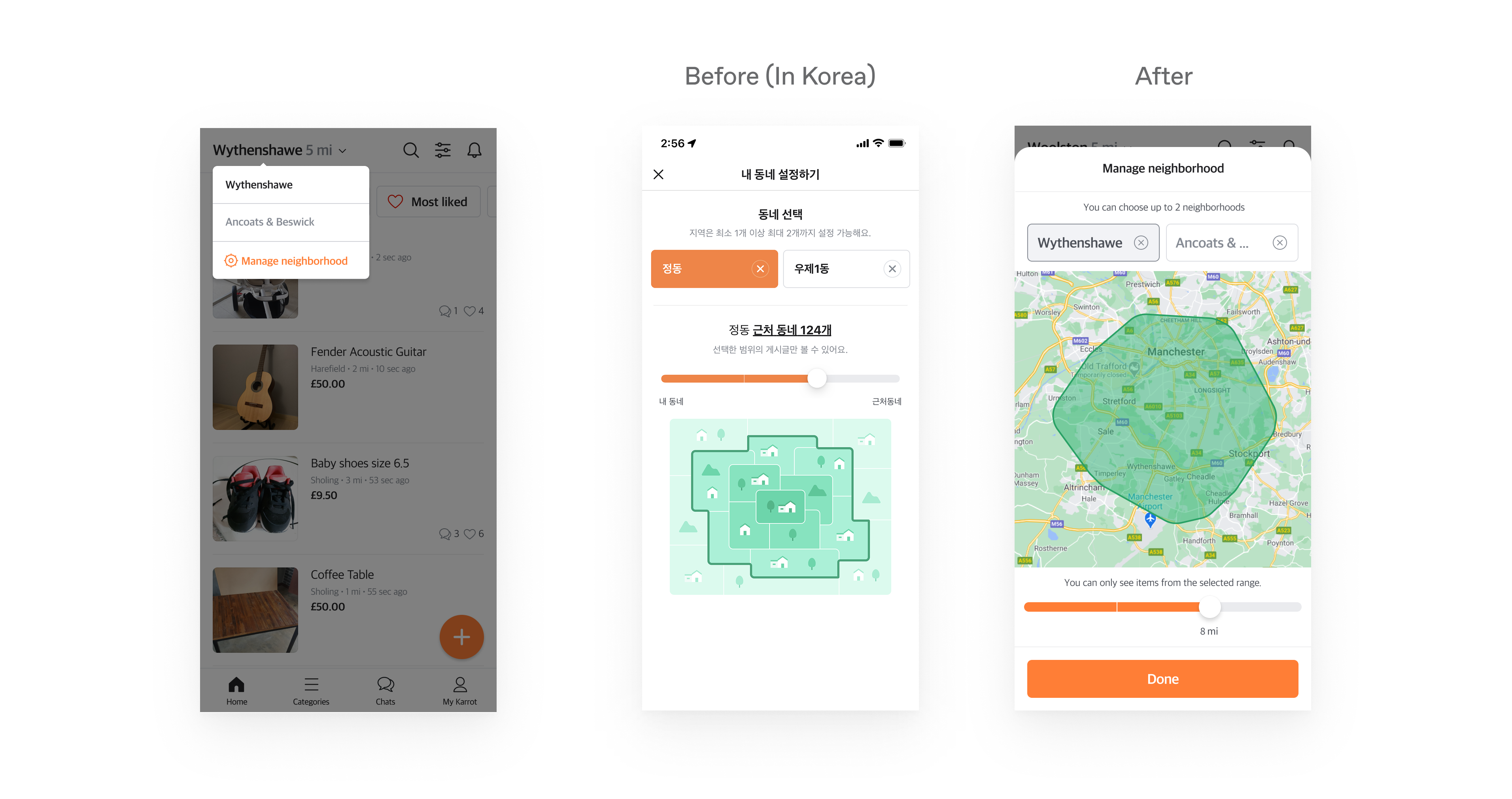
A better way to define your neighborhood.
In Korea, Karrot used predefined neighborhood zones which worked great in dense cities. But in the US or UK, people think in terms of miles, not neighborhoods.
So I replaced the static zone selector with an interactive radius picker. You could see your area on a map, adjust the size, and immediately understand what “local” meant. It was a small change that made a big difference in how connected the app felt.
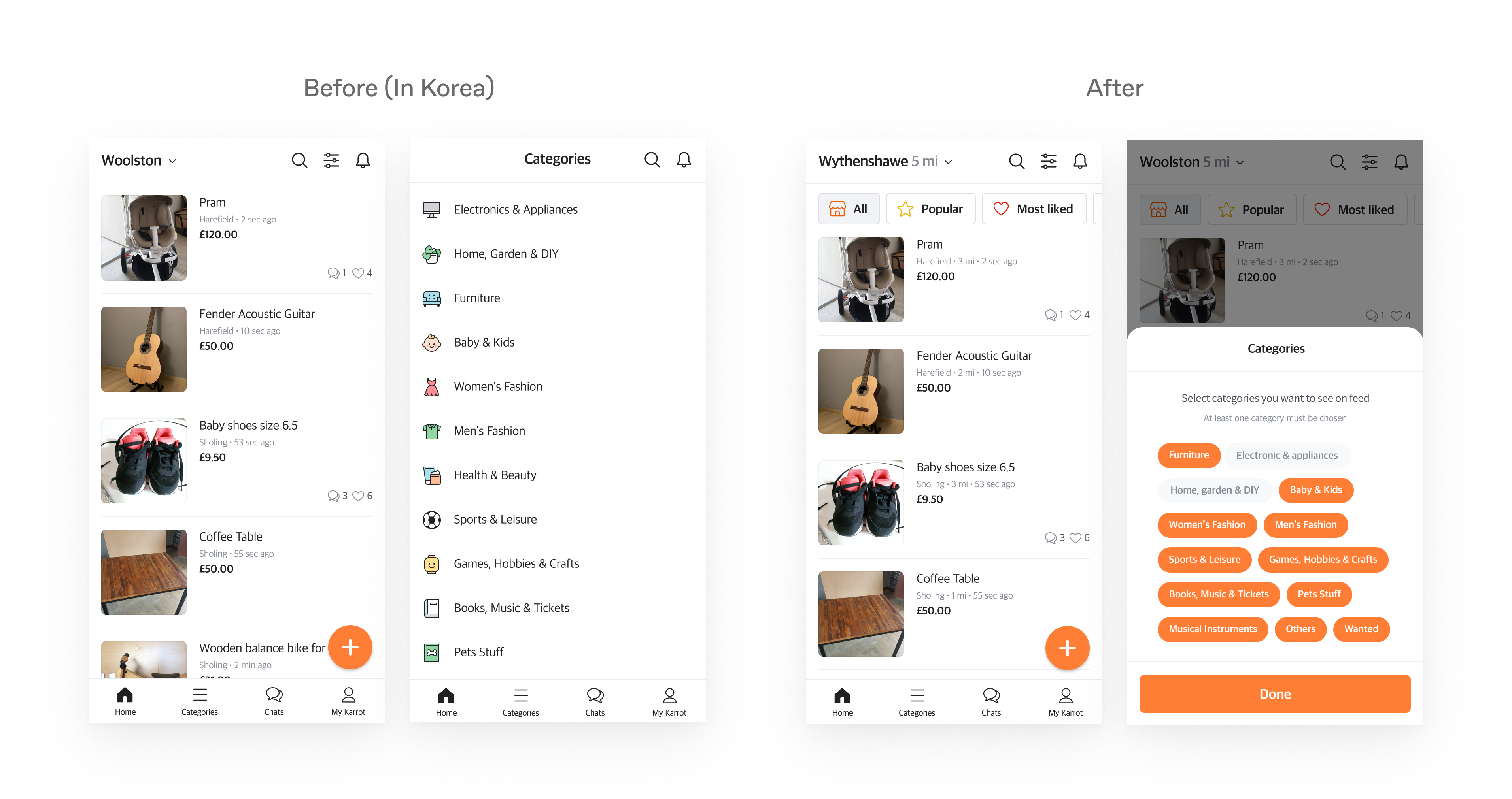
A feed that felt more like a marketplace stroll.
The old feed was just recent posts. No curation. No filters. No discovery. I introduced new filters like "popular," "most liked," "nearby," and "free" to give users more ways to explore. I also changed how categories worked. Instead of dumping users into a new screen, they could now filter categories inline through a sliding sheet. These changes made the app feel less like a list and more like a place you wanted to hang out in.
Results
We moved from porting features to designing for cultural context.
The Korean team ended up adopting some of these global features, too. It was one of those moments where designing for edge cases helped improve the core.
